A Lesson On Responsibility

Thank you for reading my blog today. I hope you are having a really good day.

Katie, GrandDad and I were hiking one day when we came out of the pine trees to the edge of Farmer Early's corn field. He had just recently harvested his corn with a really big machine that went back and forth over the field scrapping the corn husks off their stalks, and throwing them into a big wagon that was towed behind the machine. As a result of all the picking, pulling and throwing of the corn, some of it ended up on the ground as the wagon passed by.

GrandDad said that in the olden days poor people were allowed to come into the field after the harvest, and collect this corn from the ground to take home for themselves and their family.  They called that corn "gleanings". I guess that's like some of the vegetables we get from farmer Early's garden.

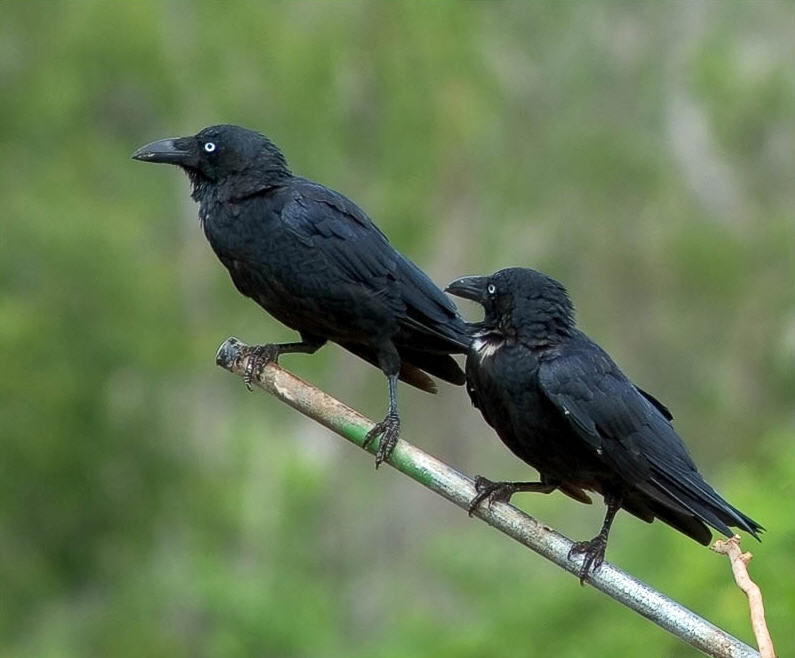
But this day it wasn't poor people out in the field. It was crows. Lots and lots of crows. And they were jabbering away at each other as they pecked at the corn. That is, all but two crows that were up in a tall pine tree watching all the others feeding below.  Katie said that maybe they just weren't hungry. But GrandDad said no, they were guards watching out for trouble. He said crows have a very good communication system. He said they have almost 50 different things they say that have a specific meaning to each other. When the guards saw trouble coming, they were supposed to call out a warning to the crows in the field.

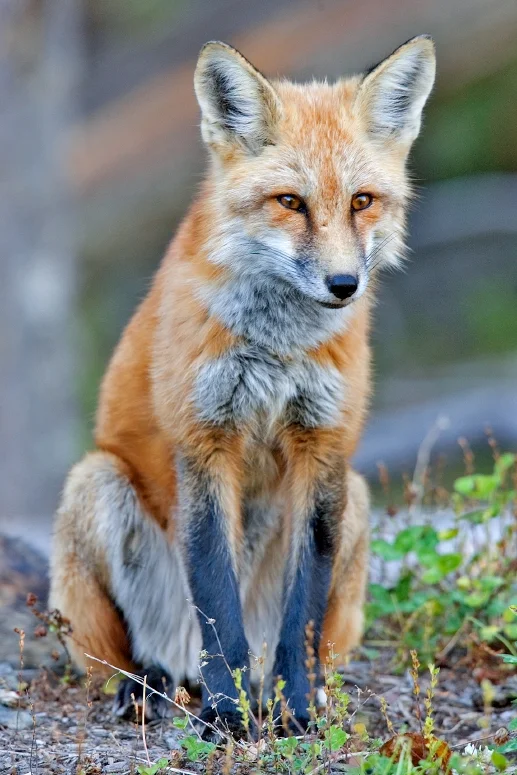
But all of a sudden a few of the crows in the field started making a terrible racket, which caused the whole flock to lift off the ground at about the same time. Looking at the place where the ruckus started, we saw a fox running around trying to catch a crow. Because of the warning, he was unsuccessful, as all of the crows were able to fly to safety.

"Now look what the crows are going to do", GrandDad said to us. So Katie and I looked up to follow the flock of crows, and were we surprised. They all flew directly at the two crows in the tall pine tree who were supposed to be the guards, and they attacked them. The two crows tried to fly away, but the other crows flew at them using their sharp talons to cut and slash them; and using their beaks to peck at them viciously. Soon the two guards fell to the ground, and the rest of the flock flew away.

We asked GrandDad what that was all about, and he said that the flock was mad at the two guards because they did not do their job. They were supposed to watch out for predator and warn the crows on the ground, and they didn't do it. They must have been asleep, as the warning came from a few crows on the ground, and not from the guards in the tree.

Wow. I guess sometimes when we are given a responsibility, we had better be careful that we do what we are supposed to do, or someone could get hurt, and that someone might even be us.

Keep your chin up.

Robert P. Rabbit
Posted on April 6, 2016 .

Grizzly Bears Listen to Their Parents Too

Thank you for reading my blog. I hope you are having a really good day.

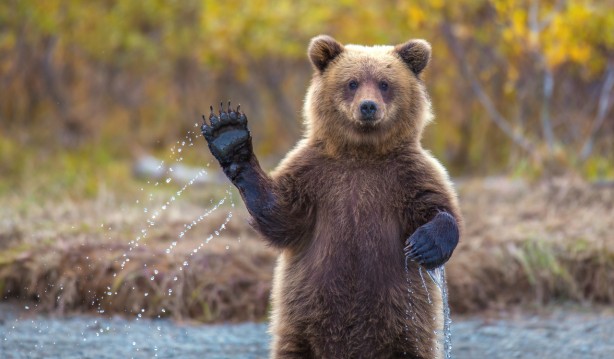
When Katie and I went to Wyoming with GrandDad and Polly, we saw a grizzly bear and her cubs. The cubs weren't very old, so they probably would not be afraid of us. You see, the mother bear has to teach the cubs to be afraid of predators , and others that will hurt them-- and people unfortunately sometimes harm bears. If the Cubs get too close to a skunk, or a porcupine , mama bear will give them a really good swat. Sending then head over heals away from the danger. Maybe your parents spank you sometimes, but you need to know it's to help you not make the same mistake again. When we saw the cubs, I had to keep Katie from trying to go play with them, because mama bear was close by, and would have charged out to hurt Katie, thinking Katie was going to harm her cubs.

Anyway, back to what mama bear does for her cubs. In the Fall mama bear will really eat lots, and lots of food. Mostly berries and salmon. She will gain 40 or 50 pounds, and then she will dig a den in the ground where she will spend the winter. It will be on a hillside, so rainwater will drain away from the den, and it will face North, away from the Sun, because she wants the entrance completely covered in snow to provide as much insulation as possible. If the den faced South, that's the direction the sun comes from in the winter, and it might melt the snow.  She even makes a bed of pine boughs so she will be comfortable.

In her den she will do what they call "hibernate", which is just a fancy word for sleep. And I don't mean sleep all night, I mean sleep all winter -- right up to Spring. In the meantime, while she is sleeping in the den she will wake up in time to give birth to two or three Cubs. But she will stay in the den while she feeds them her milk, and while they grow big enough to run and jump on their own.  Then, at some point in time she will bring the Cubs out of the den to start "how to be a bear" school.

This is when she starts to teach them what food to eat, and where to find it. For instance, she knows that grubs are good food for them (uggh), so she will teach them how to find ugly, slimy, gross looking grubs under old logs, or big rocks. Or maybe how to dig up mice or other rodents from under ground. Or how to find the best berry patch. And most importantly, how to pin a fish to the bottom of the stream, or how to knock it onshore, when it can be caught easily.

Unlike us rabbits, who are smart from the very beginning, it takes mama bear up to two years to teach her cubs enough for them to make it on their own. But I guess that's faster than humans. GrandDad says it took 21 years for Katie's mom to make it on her own. But actually I think that GrandDad just didn't want for Katie's mom to move away 'cause he was going to miss her lots, so he kept coming up with things to teach her about life.

Your mom and dad are teaching you about live right now, just like mama bear and her cubs.

Keep your chin up.

Robert P. Rabbit
Posted on April 6, 2016 .

The Life of Bees

Thank you for visiting my blog. I hope you are having a really good day.

Us rabbits have never had much use for bees. It's not that we don't like them, we just don't eat honey like you do, and bees make an awful lot of honey. And I'll tell you something really interesting. When God made the bee, he made one of the most complicated and efficient machines ever. I mean, it takes a lot to be a bee ( hey, that sounds neat. I think I want to be a bee - well, not really, I like being a rabbit).

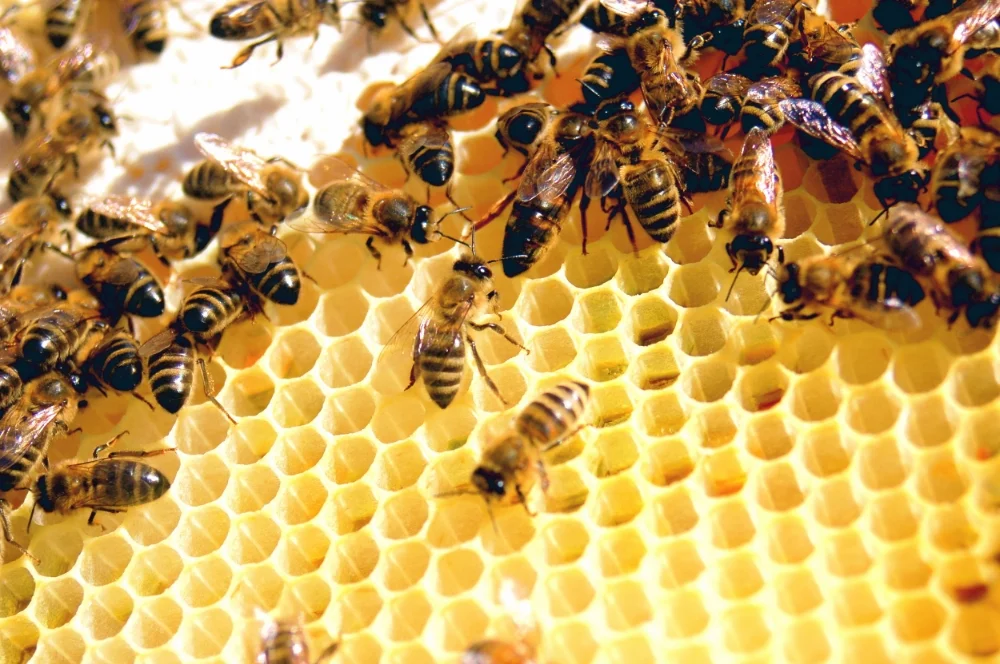
The bee hive is where the bees spend their lives. There are as many as 60,000 bees in a hive (that's because the queen bee - and there is only one queen bee - lays two or three thousand eggs a day ) and one kind of bee, the worker bee, passes through six different cycles in its short life. That means it will have six different jobs as it grows up.

When it first hatches out of its egg it is a cleaner bee. That means it cleans up the cells in the hive where the queen lays the eggs. Next it becomes a nurse, feeding honey to all the larva that will become the new bees. After that it becomes a storer of honey; then a repairer of the hive where it might be damaged; then a guard to keep predators away who would steal their honey, or eat the larva; and finally it becomes a scout that goes out looking for honey. They also build the hive from the very beginning. If you have ever seen a honeycomb, you can tell what a great job they have done. It is perfectly shaped, with each eight sided cell the exact size it needs to be. And it is made in such a way that none of the honey they make will leak out if the hive. Now if you want to see how cool that is have your mother pour some honey into your hand and then turn your hand over and see if you can hold the honey in. I'll bet you anything it all leaks between your fingers.

And all of the bees talk to each other in very strange ways. Inside the hive if there aren't enough bees doing a certain job, they all seem to know it, and they begin a moaning sound that goes throughout the hive. They keep it up until just enough bees change jobs to where the colony is balanced again. That means some of the workers will skip a job and maybe jump up to jobs where they might be needed. When they are in balance again, they stop moaning. I think if I was a worker bee I'd figure out which job I like best and jump right there as soon as I was allowed.

But the most interesting communication between bees comes from the scouts. They are the ones who go out looking for flowers that have lots of nectar, and when one scout has found a good source, that scout must come back and tell the bees that are going to gather the nectar just exactly where it is. They do this by first walking in circles once they are back at the hive. If they do just one circle, the nectar is closer than 300 feet; and if they make a figure eight, it is over 300 feet. Then they point their bodies either up or down. Up means the nectar is toward the sun, and down means it is away from the sun. And by vibrating really fast or slow they can tell the other bees the exact distance, and precise direction. And this is really important because the gatherer will take only enough honey to get to the nectar. That's because it wants to leave lots of room to bring lots of nectar back. If the nectar is further that it anticipated, it will run out of honey to eat for the energy it needs to fly, and it will drop to the ground and die. So the scout really has to be good about communicating to the other bees, or a lot of gatherers will really be made at that scout.

When a bee gets back with lots of nectar, it transfers it to others in the hive who then take it inside to be stored for food. While they are carrying it in their stomachs, it is being made into honey so that when they spit it out, it has become just what you see in the jar of honey on your breakfast table.

Ok, I'm sorry to be the one to have told you that the honey you eat came directly from the stomach of a bee, but that's the truth of it. But don't worry about it, honey is one of the purest foods there is in the world, and Katie tells me it even serves as a medicine for lots of illnesses you humans seem to get. In fact, GrandDad says he takes a tablespoon of honey every day, and he's really old, so it must be doing some good.

Keep your head up

Robert P. Rabbit

Posted on April 8, 2016 .

Owls Are Amazing!

Thank you for reading my blog. I hope you are having a really good day,

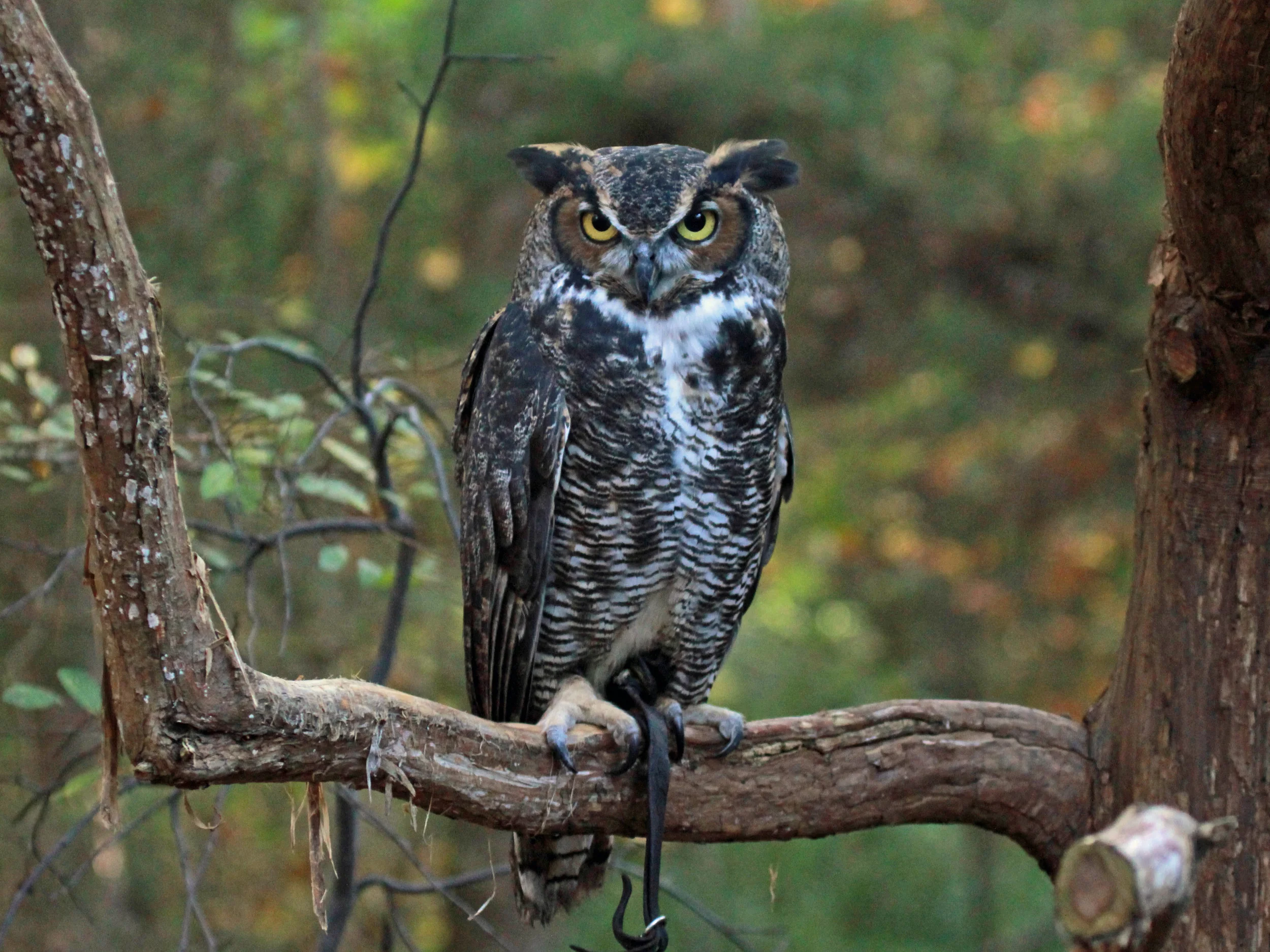
There is a bird in the Forrest they call The Great Horned Owl. Actually it doesn't have horns at all -- just little tufts of feathers that are pointed and look like horns. And most people think these are their ears, but we rabbits know they aren't that either. The Owl's ears are very unique, and are located lower down on their heads than those tufts of feathers. And here is where it gets really interesting. You see, the Owl has one ear on the side of its head about eye level. You can't really see it, as it's covered by feathers. The other ear is down about as low as its beak.

Now you might wonder why God made the Owls' ears like that. Well, I'll tell you. When sound reaches the Owl, one ear hears it a fraction of a second before the other ear. This helps the Owl pinpoint the source of the sound very accurately , and means that when he takes off from the tree limb at a very high speed, he knows exactly where he is headed.

And added to that are two amazing things about the Owls eyes. All bird's eyes have these little things called "rod cells". This is the part of the eye that captures light, and the more of these that a bird has, the better the bird can see in the dark. The Owl has many more of these rod cells than other birds, so many more that the Owl can almost see in the pitch black dark. You humans don't even have those. If you want to see in the dark, you have to put on "night goggles" --- just like the characters in some of the video games you play use. If there is the slightest bit of light in the Forrest, even from the stars, the Owl sees just about like it was daytime.

The second thing the Owl's eyes have are "overlaps". That means that each eye brings in what it sees in a slightly different place. It is like when your parents take you to a 3D movie, and they give you those glasses to watch the movie. The picture on the screen is "Overlapped", and if you don't have on the 3D glasses, the picture looks blurred. The glasses make the picture look just like it is supposed to look, and it has a depth that a regular movie doesn't have. The "overlap" in the Owl's eyes helps it determine depth much better, and just how far away an object is, so when the Owl flies it knows the spot it is going to; as well as how far away it is.

Well, with all that going for it, the Owl is a bird we rabbits want to avoid, so we won't be dinner for some greedy Owl, who ought to be eating seeds like other self respecting birds. So we figured something out about the Owl. That is that the Owl nests very early in the Spring -- way before other birds. And it lays its eggs right away. After that, the Owl won't leave the nest for three or four months while it waits for the eggs to hatch. This is because the Owl knows it can get very cold in the Spring, and if it leaves the nest to hunt, its eggs can easily freeze, killing the little Owls inside. When the eggs have hatched, we rabbits know to stay away from the Owl's nest. After three months of no food, and with three hungry little Owls to feed, it has to get busy hunting. In addition, Because it laid its eggs so early, the leaves haven't come out on the trees yet, making its job of finding some little mice a lot easier.

The problem with all of this is that those little fellows will grow from about three inches when the hatch to over two feet in just three months. Then we rabbits have three more Owls in the Forrest to worry about ---Ugg!!!!

Keep your chin up.

Robert P. Rabbit

Posted on April 1, 2016 and filed under robert p. rabbit stories.

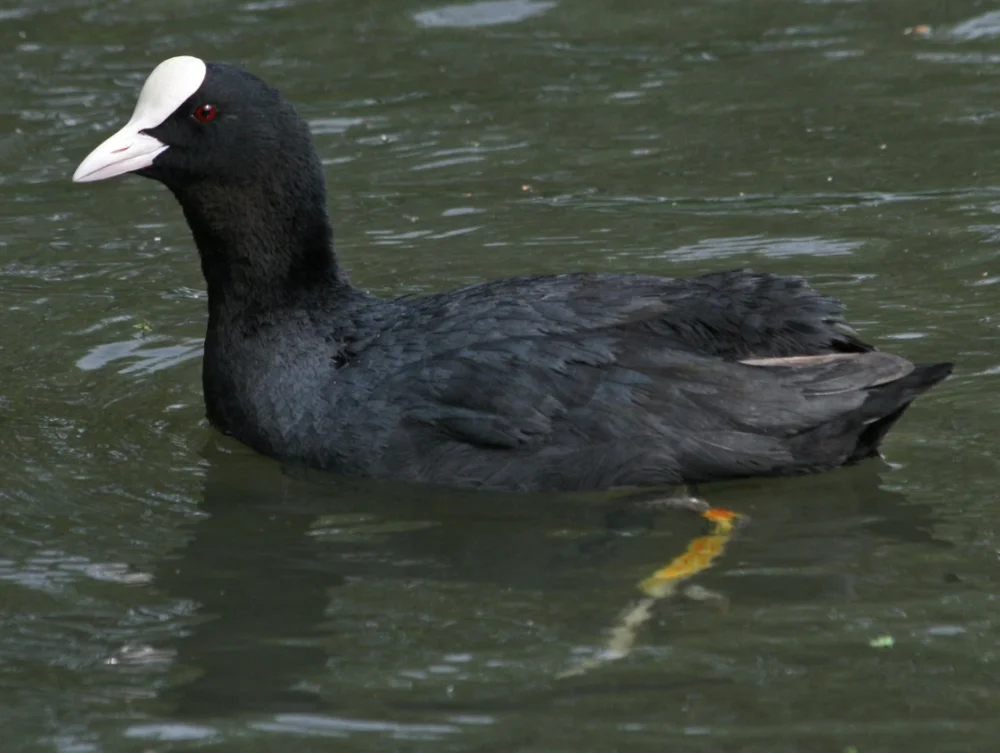
Safety In Numbers: The Eurasian Coot

Thank you for reading my blog. I hope you are having a really good day.

There are a bunch of creatures that look like ducks that come from time to time to Tallulah Lake to take up residence. Sometimes there are as many as 100 of them. They are solid black with white beaks and red eyes. Not bad looking for duck like birds, and they are good swimmers too. They are called coots.

Most of the time they are swimming about the lake in small groups, or by themselves. But once in a while they will all gather in a very tight group looking like a great big black blanket on the lake. They are so tight together you could drop a dime in the middle of them and it wouldn't hit the water, it would stay on a coot's back!
When this happens I will immediately look up, and be very careful. That's because there will be a hawk in the air. If a coot leaves the group, the hawk would easily dive down and swoop it up. If a coot tried to swim away under water, the hawk would just follow it and, when it came up for water, the hawk would get it.
But by staying in their tight group, the hawk doesn't dare try to get just one coot. It would get caught in the bunch of birds, not be able to fly away, and then drown.

Sometimes there can be safety in groups -- especially if the group is my 25 brothers.

Keep your chin up!

Robert P. Rabbit 

Posted on March 25, 2016 and filed under robert p. rabbit stories.

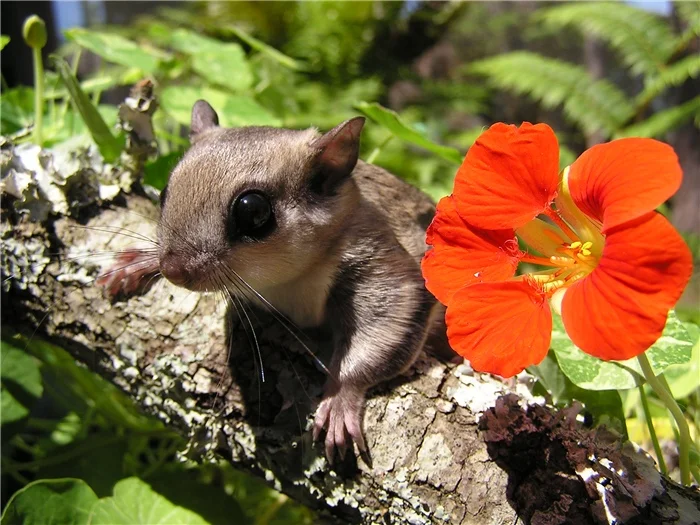
Flying Squirrels Might Surprise You

Thanks for reading my blog. I hope you are having a really good day.

One time when Katie and I were hiking around Tallulah Gorge near her house... ok, Katie was hiking, and I was in her backpack. Anyway, we looked a little ways off the trail and saw a bobcat climbing up a pine tree. That's not unusual in the North Georgia mountains, but at the very top of the tree, out on the stub of a limb, was a squirrel happily eating some pine nuts it had gathered in its cheeks. "Oh dear!" exclaimed Katie "that poor squirrel is trapped. There is no way it can escape that bobcat."

I told her not to worry, the squirrel wasn't trapped. The bobcat was climbing the tree for nothing.

"But there is no way the squirrel can get by the bobcat down the tree, and it's as far up the tree as it can go" she said. I told her the squirrel wasn't worried at all, to look how calmly he is eating the nuts while watching the bobcat get closer. “That's what I mean," said Katie. “The bobcat is almost to him. He can't escape!”

"Just watch" I told her. Just then, as the bobcat reached the branch where the squirrel was sitting, the squirrel launched itself into the air, spread its front and back paws and the folds of skin between those paws just spread out like a parachute. The squirrel glided 150 feet to the boughs of a big oak tree where it swooped up to make the softest of landings.

"Wow, that was beautiful" said Katie. "I know, it really was. That's because that is a flying squirrel" I said.

I knew it was a flying squirrel because it was smaller than a regular squirrel, and had a rounder nose, and a flat tail it uses to guide itself while in flight. It doesn't actually fly, though, it just glides. But flying squirrels have been known to go up to 300 feet in the air if the wind is right.

It's good to know that you are safe when faced with what otherwise might be danger. It's kind of like being with your parents in a bad storm. You know they will take care of you even though by yourself you might not know the safest place to go.

Keep your chin up!

Robert P. Rabbit 

Posted on March 18, 2016 and filed under robert p. rabbit stories.

Sometimes You Find Yourself Hanging Upside Down

Thank you for reading my blog. I hope you are having a really good day.

Have you ever heard of a snare? It's a trap that hunters sometimes use to catch small game in the forest. The way they set it is to make a loop out of wire, or string, and put this loop low to the ground on a path that small animals might take to the creek, or to a place where there are berries to eat. Then they tie another string onto the loop, and run the string to a tree branch that will spring up if something is caught in the loop. Father taught us not to walk down the paths all the other small animals take for just this reason -- hunters set snares on these paths.

Well I forgot. And one night on my way back from putting the chicken in front of the foxes den, I ran right into a snare. As soon as I realized it I leapt as fast as I could, hoping I would make it through the loop before it closed. I didn't make it, and the loop closed on my back foot, the tree limb sprang into the air, and I found myself hanging upside down in the air. I was toast. In the morning the hunter would surely get me.

But just then I looked up and low and behold, on the branch right next to me was my friend Pogo the Possum. She was hanging upside down with her tail wrapped around the branch. "Hi" she said, " I see you've decided to hang upside down like I do. Fun isn't it?” "It may be for you", I said, " but I'd rather be on the ground. I can't with this string holding me up. Will you please help me down?” "But I like having you here like this" she said, "if I help you down, when I talk to you you will be upside down. This way when I talk to you you are right side up.”

Pogo isn't the brightest star in the sky, but she had a good point. So I told her if she agreed to help me down, I would talk to her for a while. Actually, the conversation was quite enjoyable, and we lost track of time. But all of a sudden I could hear the hunters coming down the path, and I thought it was too late. It would take too long for her to help me down. But I forgot something. Possum have more teeth than any other animal. Most have from 20-30 teeth. Possums have 50 teeth.

It took Pogo one quick bite and grind to break the string and I was on the ground running. When I looked around Pogo said, "You'll have to get snared again sometime, I enjoyed that!"

I don't think so Pogo.

Keep your chin up!

Robert P.Rabbit 

Posted on March 11, 2016 and filed under robert p. rabbit stories.

How to Deal With Being Sprayed By A Skunk

Thank you for reading my blog. I hope you are having a really good day.

Yesterday I told you how Robert Q. Rabbit discovered what a skunk is. We were headed home, and Robert Q. wasn't going to have to tell father what he had done. Father would know by the time Robert Q. got within 50 feet of him, he smelled so bad.

When we got home Robert Q. asked "am I going to be punished?" Father answered "I think you've been punished enough. You will smell for days and days, and no one will want to be near you, so you'll have to sleep outside." "Won't something get me in the night?" asked Robert Q.

"No" said father "everyone will think you are a skunk, and unlike you, they have enough sense not to come near a skunk. But I know something that will help you.” And he looked at the rest of us and said "some of you boys come with me.”

We went on a long walk that night to Farmer Early's garden to get tomatoes. Farmer Early doesn't mind if we use some tomatoes every now and again. We took the tomatoes back home and father showed us what to do.  We put the tomatoes into a big bowl and crushed the up and swirled and swirled.  "It's tomato juice" said father, "and it's the only thing I know of that will take away the smell of a skunk.”

At home father broke open the cans on a rock, and gave Robert Q. a good bath of tomato juice. None of us helped because he smelled so bad.
The tomato juice helped, but for the next week Robert Q. was not just a smelly rabbit, he was a bright red smelly rabbit.

Keep you chin up!

Robert P. Rabbit 

Robert Q. Rabbit Meets A Skunk

Thank you for reading my blog today. I hope you are having a really good day.

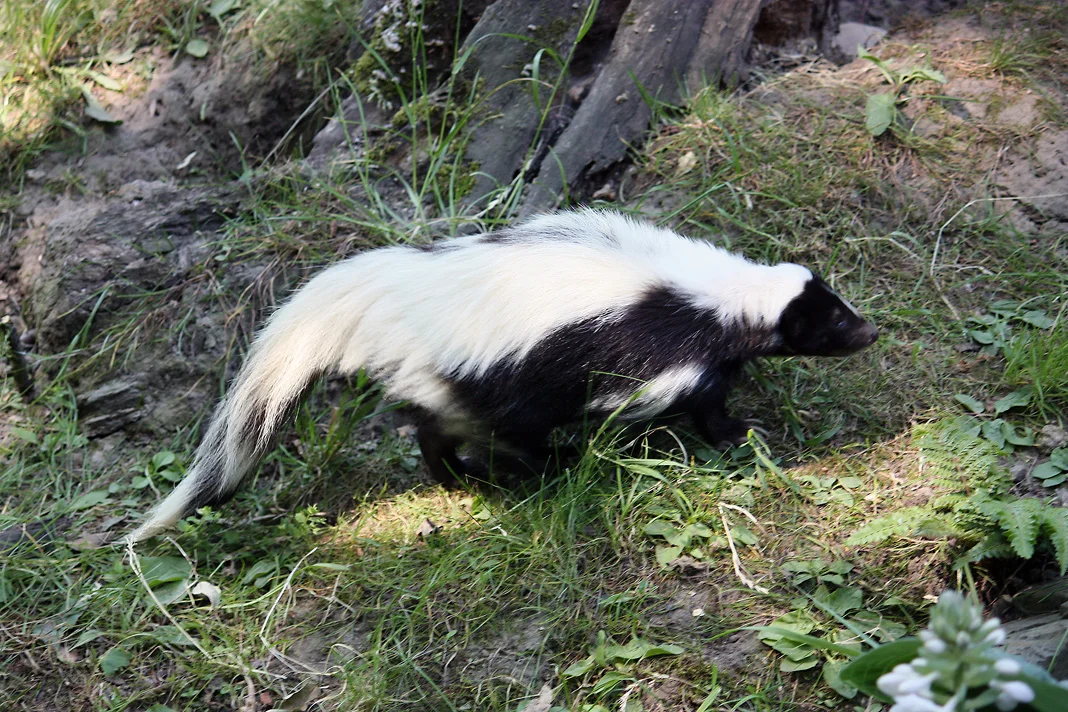
Every family has someone who is always cutting up, playing jokes on the others and always running off doing the unexpected. For us it's Robert Q. Rabbit, my older brother. Father always told us to stay away from the little critter with the white stripe down his back. He didn't tell us why; for him, it was enough that he told us not to do it, and he expected us to obey. But sure enough, Robert Q. had to know why. So one day while we were out playing, there, at the edge of the field, was one of those black critters with a white stripe down his back. "Let's go see what this is", said Robert Q. "No" I said, "father said to stay away from him." "Well, I'm going over to see what he's all about" said Robert Q, and off he went. When he got close to the critter he started poking him with a stick " Look", he yelled " he can't hurt us, he's no bigger than we are". Just then the critter turned around, raised his tail and squirted something all over Robert Q., who immediately started yelling, crying, rubbing his eyes and nose and rolling around on the ground like he was trying to rub something off his fur.

And he was trying to do just that. Robert Q had discovered a skunk, and I mean really discovered a skunk. I didn't want to get near him, he smelled so bad, so I made him walk way behind me -- but even then he was smelling up the whole forest.

I guess we ought to obey our parents, even when we aren't exactly sure why. After all, if we don't obey we might just run into a skunk.

Keep your chin up!

Robert P. Rabbit 

Posted on February 26, 2016 and filed under robert p. rabbit stories.

There Is More Than One Way To Fool A Fox

Thanks for reading my blog. I hope you are having a really good day today.

Where I live in the North Georgia mountains when I'm not with Katie, we used to have trouble with a red fox. Foxes find rabbits mostly by scent, so each night we would post one of us boys near his den, and as soon as he came in for the night, the one watching would hop back home and tell us he was there. Then father, and all 26 boys would get in single file and make a long trail of our scent in a part of the woods we didn't intend to be in the next day. The poor fox would find the scent when he came out of his den; be all excited about finding so many rabbits; follow our fake trail all day; and finally have to settle for a mouse for dinner when he realized he wasn't getting any rabbits.

This got old after a while, so father came up with another plan. There was a chicken plant nearby where they get chicken ready for the local Chick Fil A, and father took us there with some plastic grocery bags. We put some of the chicken left overs they were throwing out each day into the bags, and while the fox was asleep, we put them right outside the entrance to his den. In the morning he ate his fill of chicken, so he didn't need to hunt rabbits that day.

Only one of us each day had to do this, so each of us took one day a month, and father took the other days. The fox finally saw us doing this, and he didn't even try to catch us. We think he decided he liked chicken much better than rabbit.

In fact, now when he prowls around during the day he's not hunting, he's guarding this part of the woods to keep other predators away from us. He doesn't want any other animals getting in the way of his free food.

Keep your chin up!

Robert P. Rabbit 

Posted on February 19, 2016 .

Things You Can Learn From A Turtle

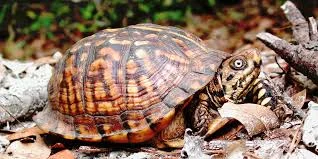
The Eastern Box Turtle

The Eastern Box Turtle

Thanks for reading my blog. I hope you are having a really good day.

Every kid I've ever met likes turtles. Especially the ones they find in their back yard. But unfortunately, the friendliest turtle around, the Eastern Box Turtle, is found nowhere in the world but the Eastern United States. So lots of kids have never even seen one .

This turtle spends most of its time in the woods, but it likes the water-- especially in the hot part of the summer.  Here's the reason I wanted to tell you about the box turtle. It's because of its discipline. By that I mean its ability to forgo instant pleasure because of future risk.

The box turtle's defense against its enemies is to pull back into its shell and stay there until a predator gives up trying to get it out of it's shell. A raccoon will try for as long as two hours to pry open the turtle's shell, so it is important that the turtle stay shut.

But the problem is that it takes a lot of strength to stay closed that long. And it also can only be done if the turtle's stomach isn't too full. If the turtle overeats, the pressure of the closed shell would be too great on its stomach if held too long. It would have to open up to relieve the pressure, and the raccoon could then kill it.

So the turtle has to stop eating before it gets too full, even if it was in the best berry patch it had ever seen. It must stop eating at the right time.

Sometimes it is necessary for you to stop doing something you really want to keep doing, because it's the right thing to do. Like when your mother calls you into the house from playing in the yard. You don't want to have to go in, but it's the right thing to do.

Keep your chin up!

Robert P. Rabbit 

Posted on February 12, 2016 .

A Mama Opossum and Her Babies

Thank you for reading my blog. I hope you are having a good day today.

I have a little friend in the mountains named Pogo. Pogo is a Possum. Oh I know, the way it really is spelled is "Opossum", but nobody ever pronounces the "O" -- it's like it isn't even there. So I just spell it the way it is pronounced.

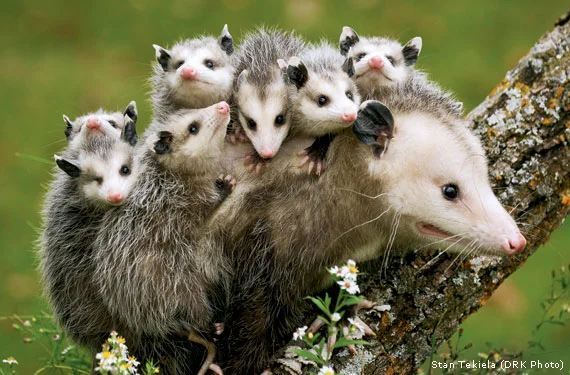
Anyway, Pogo is a girl possum, and she doesn't come out at all in the daytime. She is what is known as a nocturnal animal. That means that she spends most of her time awake at night, and sleeping during the day. If you have ever seen a possum it was probably crossing the road in front of your parents’ car, and it was caught in the headlights. Pogo doesn't have a home of her own, she sleeps in whatever hole or small space she can find, and it might be different every day.

When she had her babies, she had no where to put them. But that's ok, because the way God made her she just carried them around in a pouch on her tummy. And it was easy, because her babies were so small when they were born you could put 20 of them in a teaspoon. But she only had 11 of them, so there was plenty of room. Then, when the babies were two and a half months old they got too big for her pouch (each was then the size of a small mouse) so they came out of the pouch and crawled up on her back. They stay there for another month, going every where she went, and for 30 days they went every where she went clinging to her back. At the end of that time, they went off on their own.

There are lots of mothers today that are like Pogo. They don't have anywhere to call home, and they have to take their children from shelter to shelter, sometimes a different one each day. Ask your parents how you might be of help to such a mother.

Keep your chin up! Robert P. Rabbit 

Posted on February 5, 2016 and filed under robert p. rabbit stories.

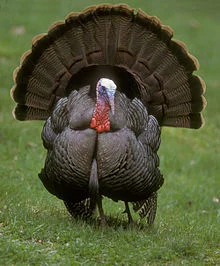
The Importance of Being Modest: A Lesson Learned From Turkey

Thank you for reading my blog. I hope that you're having a really good day.

Most of you know that the bald eagle is the national bird of the United States of America. But did you know that there were some people at the time our country was founded that wanted the national bird to be the turkey? One of those people was Benjamin Franklin, the man who discovered electricity.

Some people refer to a turkey as a "gobbler" because, as we all know when a turkey communicates it goes " gobble, gobble, gobble".

Personally, I'm glad the turkey wasn't chosen as the national bird since they aren't as pretty as a bald eagle; their heads look funny with it’s carnuncles and waddles ( those bright red things that don't look attached to its head very well) and the fact that their feet change color from red to grey to silver as they get older. In addition, male turkeys are always puffing themselves up, spreading their wings out and strutting around in circles trying to impress the female turkeys.

It seems to me that when somebody has to go to all that trouble to get noticed; there probably isn't very much worth noticing about them.

Watch out that you don't go around bragging about yourself; other people won't think much of you for doing that.

Keep your chin up!

Robert P. Rabbit

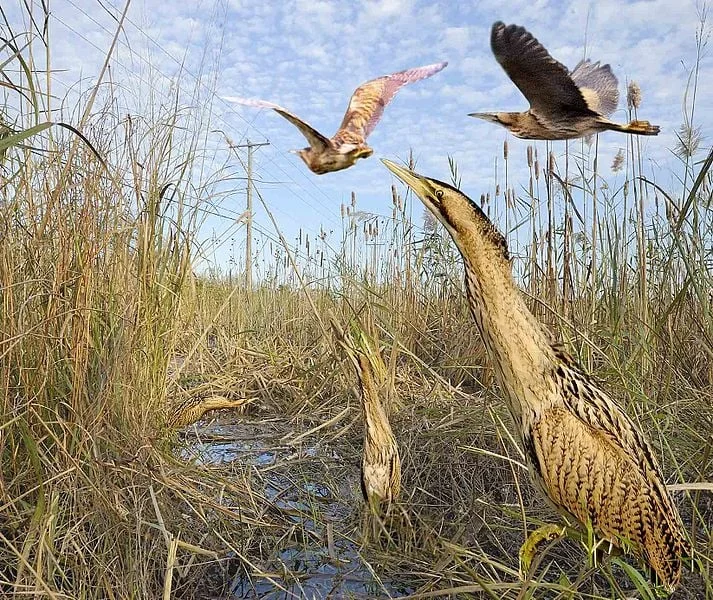
Making The Right Choice Isn't Always Easy

A family of bitterns

A family of bitterns

Thank you for reading my blog. I hope this day is a good one for you.

We have a bird in the North Georgia mountains that lives in the marshy areas where the cattails grow. Not many people have seen one, even though it stands nearly two feet high, and when it flies its wings spread out a little more than a yard stick. It is called a Bittern, and it can teach us a lot about being flexible.

By that I mean that many times we have choices to make, and we need to be ready to make the choice that best fits the circumstances. I'll use the Bittern as an example.

Let's say she is sitting on her nest when she spies a red fox close by who is looking for supper. She has three choices. She can attack the fox and use her sharp beak to harm the fox so it will run away. But to fight a fox like that will probably get her hurt. She can bristle her feathers up so she looks twice her size, but while that may scare away a snake, itprobably isn't big enough to scare a fox. Or she can stand up on her hind legs, with her beak pointed straight up into the air, and her neck stretched way up and look all the world like the cattails and reeds surrounding her. If the reeds sway in the wind, she has learned to sway with them. This is the best choice to hide from a fox and will work almost all of the time. The fox just won't see her.

Sometimes our best choice is to just stand in the cattails where we won't be noticed, rather than making a lot of noise, which could get us hurt.

Keep your chin up

Robert P. Rabbit

Posted on January 22, 2016 and filed under robert p. rabbit stories.

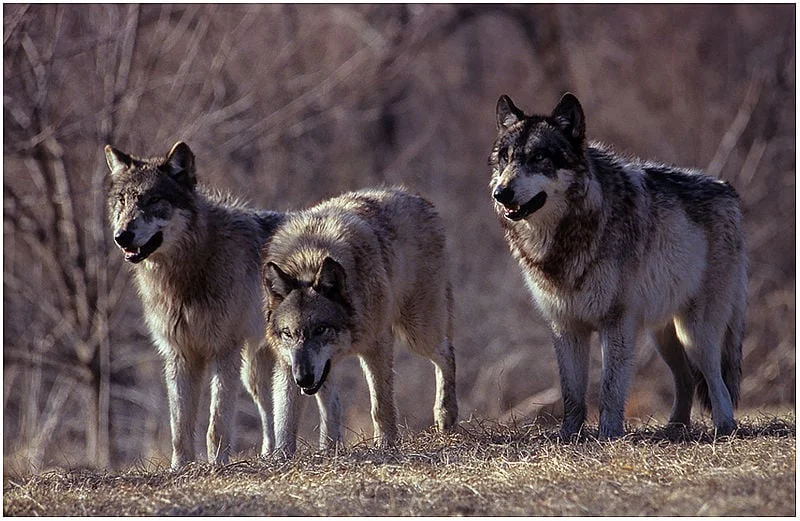
Family Is Important Even Among Wolves

Thank you for joining my blog. I hope you are having a really good day.

When I was out West with Katie,  there was another animal I heard a lot about, but fortunately did not have the occasion to see. It is the wolf. The wolf is just like a great big dog, only smarter, stronger and more ferocious. You don't really want to meet a wolf in the dark of the night all alone. But the chances are pretty good you won't meet one wolf, because wolves run in packs. That means there are more wolves together than just one, usually seven or eight. And they all have rather unpleasant personalities when it comes to any animal other than another wolf, or when it comes to human beings.

But there are a couple of good things you can say about a wolf. When they have their young, which are called pups, both the mother and the father wolf will help to take care of these pups. They each babysit, they each hunt for food for the pups, they each try to train the pups to be good wolves and they are very protective of their pups.

Another thing about the wolf is that they mate for life. That means that when a male wolf and a female wolf mate with each other, they stay together for life. If one of them dies, they never take another mate. You might have heard of the expression being a "lone wolf". Well that's what this means. If a wolf loses his or her mate, they stay alone for the rest of their lives. They still are a part of the pack, but they are generally by themselves most of the time.

So you can see even with the scariest of animals, family can be very important.

Keep your chin up

Robert P. Rabbit

Posted on January 15, 2016 and filed under robert p. rabbit stories.

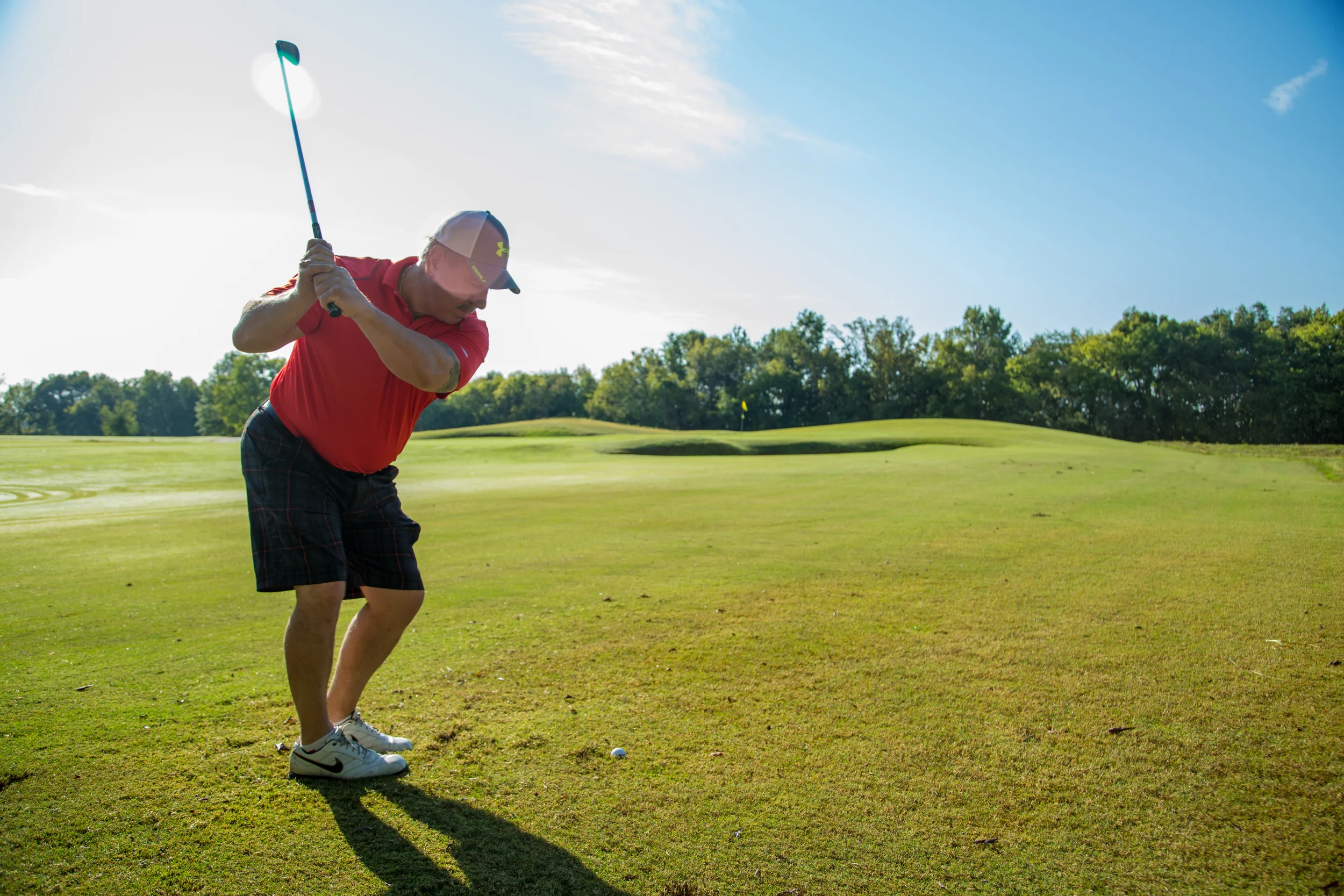
A Silly Game Called Golf: Part 02

Thank you for joining my blog. I hope you are having a really good day. 

Okay, here's part two on what I learned about golf. The players all keep track of how many times they have to hit the ball to get it into the little hole. And there are 18 little holes on the golf course. And the winner is the one who does it in the fewest shots. But actually, that's not really true. Everybody kept saying they were "taking a mulligan", and then they hit another shot, and didn't count the first shot. Then they took "free drops", which meant they could move the ball and not count it as a shot. And once I saw one of them kick the ball with his toe, and I'm sure he didn't count that shot (Katie said not to tell who it was, as that is cheating). And there were more such times they moved the ball, but didn't count it, so I really think in the end they had absolutely no idea who had the fewest shots. Maybe it was because they were all three having so much fun no one really cared who won. 

Now isn't that a good way to play a game? Try to win if you can, but if you don't win, have so much fun at it that doesn't really matter if you didn't win. 

Keep your chin up

Robert P. Rabbit 

Posted on January 8, 2016 and filed under robert p. rabbit stories.

Robert P. Rabbit visits Memorial University Medical Center Children's Hospital

Wendy had the pleasure of sitting down with Joanna, a Child Life Specialist at Memorial University Medical Center Children's Hospital to discuss the best way for donors to deliver Robert P. Rabbit books.

A Silly Game Called Golf

Thank you for joining my blog. I hope you are having a really good day. 

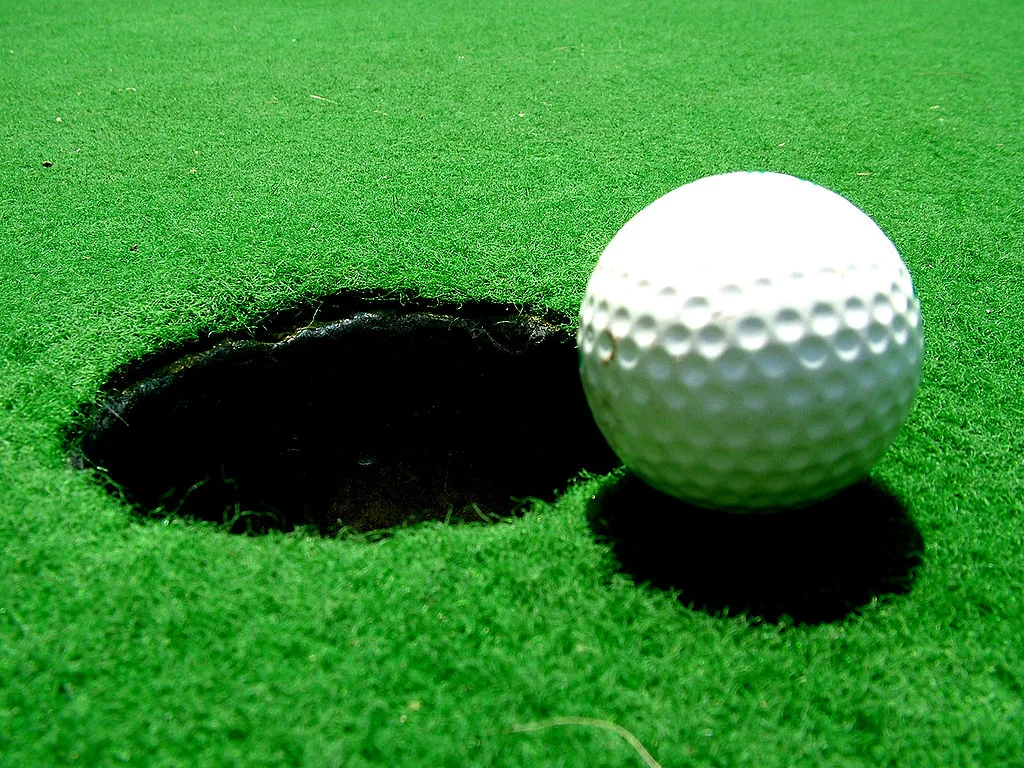
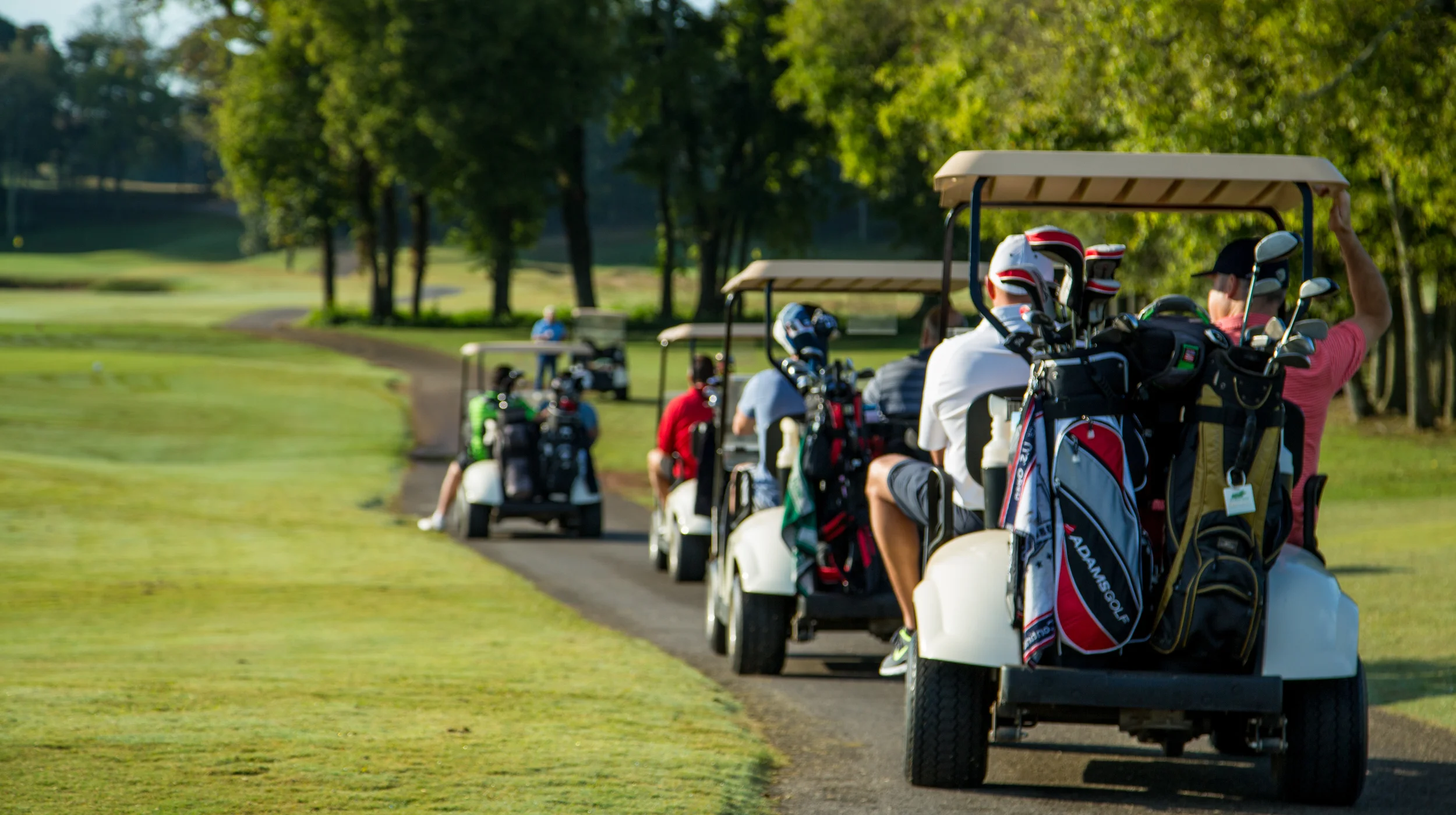
Katie and I did something interesting yesterday. We went with GrandDad to play a game called golf. In golf the players ride around in little four wheeled carts with a roof on them. Two players ride in each cart and Uncle Don and Uncle Eric were in one cart, and GrandDad was going to be in the other cart by himself, so he asked us to go along. The point of the game is to take one of the long sticks that the players bring with them, and hit a little white ball with the big end of the stick. They hit it really hard the first few times, and then when they hit it far enough so that it rolls up on a flat place where the grass is cut real short, they hit it very softly until it goes into this little hole. I know, it sounds silly, because it is silly. And these are grown ups doing this. 

"Golfball" by Lotus Head from Johannesburg, Gauteng, South Africa - sxc.hu. Licensed under CC BY-SA 3.0 via Commons - https://commons.wikimedia.org/wiki/File:Golfball.jpg#/media/File:Golfball.jpg

"Golfball" by Lotus Head from Johannesburg, Gauteng, South Africa - sxc.hu. Licensed under CC BY-SA 3.0 via Commons - https://commons.wikimedia.org/wiki/File:Golfball.jpg#/media/File:Golfball.jpg

Anyway, today and tomorrow I'll tell you a few things I learned about golf. The first is that I know what the roof is for on the golf cart. It's so that when uncle Eric or Uncle Don don't hit the ball straight (which happened a lot), the ball won't fall out of the sky and hit us on the head. Then there are all these funny things they say to each other that don't seem to mean a thing, like "boy, you got a good piece of that one", or " I can't seem to get rid of my slice", or " oh phooey, I duffed it". I think the next time we go with them we will need to take an interpreter to tell us what all those things mean. One time Katie put her hands over my ears as uncle Eric threw his club after hitting the ball into a lake. Now I wonder what that was all about?

Keep your chin up

Robert P. Rabbit

Posted on January 1, 2016 .

The Big, Big Ocean

Thank you for joining my blog. I hope you are having a really good day.

When I went with Katie to the beach, I saw the ocean for the first time. It is really big. Not like the lakes in North Georgia, where I'm from. I can see the other side of those lakes with no trouble at all. But the ocean doesn't have another side -- at least that I can see. Katie said we could get in her granddad's pontoon boat, and run it at top speed for a month and probably still not get to the other side. Now that's what I call big. So my question is this, before we had airplanes and satellites to tell us there really is another side, who was the first one brave enough to try to get all the way across? How did they know they wouldn't run out of food, or just fall off the edge of the ocean? 

Maybe one of your teachers can tell you and, when you find out, you can let me know. I could ask Katie, but I don't want her to know I don't know. 

Keep your chin up

Robert P. Rabbit 

Posted on December 25, 2015 .

Flies Have 4,000 Eyes!

Thank you for joining my blog. I hope you are having a really good day. 

I'm going to talk about an insect today. And it's an insect nobody likes, unless you're a spider, and you'd like it for dinner. The insect is the fly. 

Uggg.  Did you ever wonder why it is so hard to hit a fly with your hand? It's almost impossible, unless it is Katie's uncle Don, the Marine fighter pilot. He catches them in midair. Why, I'm not sure, but then sometimes Marines do strange things I'm told.

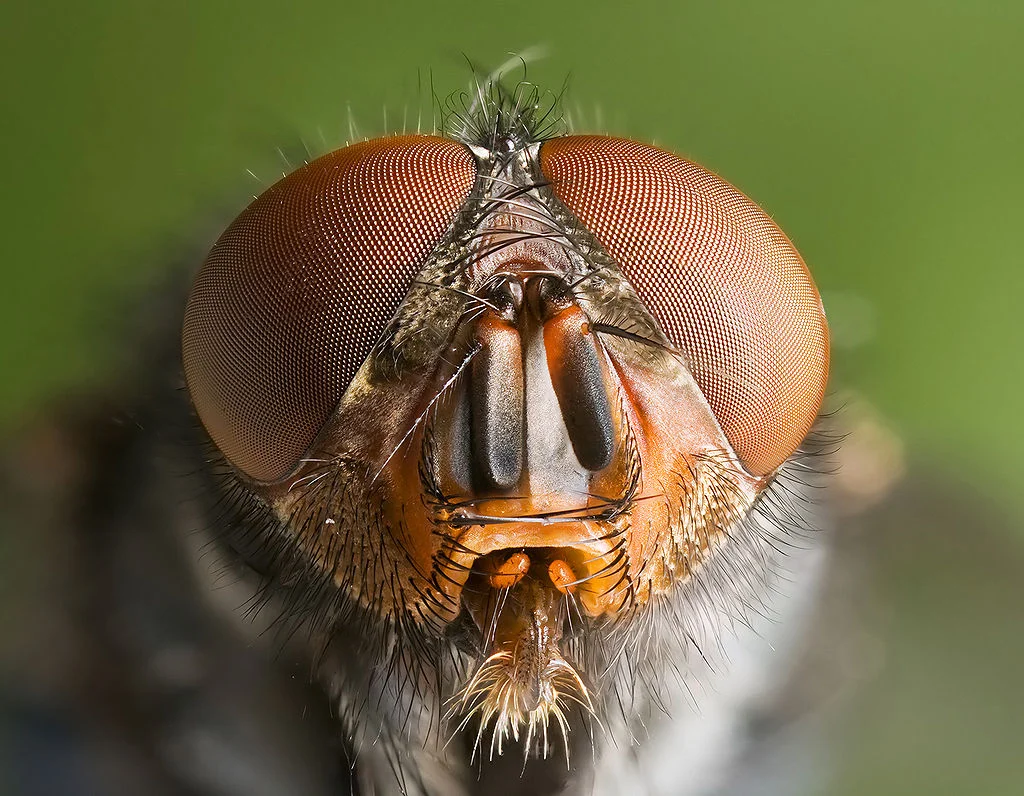
Anyway, the reason it's so hard to hit a fly is because it has 4,000 eyes. Yep, that's what I said, 4,000 eyes. They are all enclosed in the large thing that looks like a normal eye on the side of its head. And they all work independently of each other. The fly never has to move its head, or its big eye, as it is looking all around itself at the same time, all of the time. Cool, isn't it?

"Calliphora vomitoria Portrait" by JJ Harrison (jjharrison89@facebook.com) - Own work. Licensed under CC BY-SA 3.0 via Commons - https://commons.wikimedia.org/wiki/File:Calliphora_vomitoria_Portrait.jpg#/media/File:Calliphora_vomitoria_Portrait.jpg

"Calliphora vomitoria Portrait" by JJ Harrison (jjharrison89@facebook.com) - Own work. Licensed under CC BY-SA 3.0 via Commons - https://commons.wikimedia.org/wiki/File:Calliphora_vomitoria_Portrait.jpg#/media/File:Calliphora_vomitoria_Portrait.jpg

The good thing about a fly is that if he isn't trapped in your house, he can travel up to 60 miles in a day. So chase him out of your house, and you probably won't see him again. 

Keep your chin up. 

Robert P. Rabbit 
Posted on December 18, 2015 .